 Alessandro Romano · 26 March 2025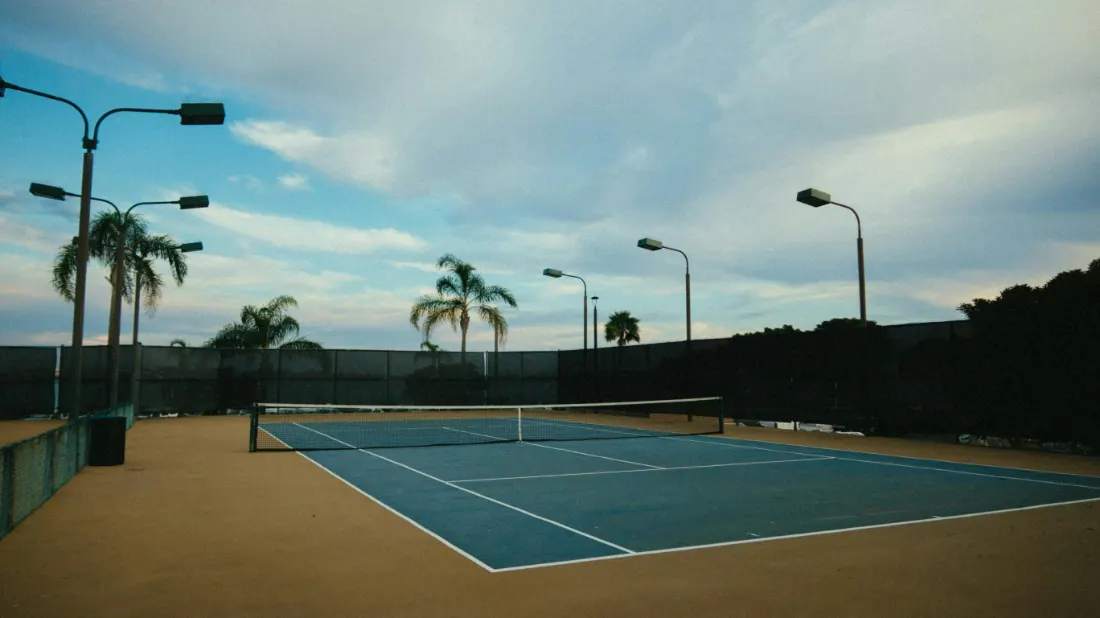
Tennis is one of the world's most loved sports and it's played on courts with very specific dimensions. This guide covers the standard tennis court dimensions in feet and meters, as well as the differences between indoor tennis, padel, and pickleball courts.
Tennis Court Dimensions in Feet
A standard tennis court has precise measurements that ensure fair play. Below are the key tennis court dimensions in feet:
- Total court length: 78 feet
- Total court width: 36 feet (for doubles) and 27 feet (for singles)
- Service line distance from net: 21 feet
- Net post height: 42 inches
- Net height at center: 36 inches
- Doubles alleys width: 4.5 feet on each side
- Baseline to net distance: 39 feet
- Total tennis court dimensions in square feet: 2,808 square feet for singles and 3,888 square feet for doubles
These tennis court size dimensions are consistent across professional and amateur play, ensuring an equal experience for all players.
Metric Tennis Court Dimensions
For those who use the metric system, here are the standard tennis court dimensions in meters:
- Total court length: 23.77 meters
- Total court width: 10.97 meters (doubles) and 8.23 meters (singles)
- Service line distance from net: 6.4 meters
- Net post height: 1.07 meters
- Net height at center: 0.91 meters
- Doubles alleys width: 1.37 meters on each side
- Baseline to net distance: 11.89 meters
- Total tennis court dimensions in m: 260.87 square meters for singles and 361.77 square meters for doubles
Knowing the tennis court dimensions in meters is super helpful if you're setting up a court abroad or working with international venues.
What Are the Dimensions for Indoor Tennis Courts?
The indoor tennis court dimensions are the same standard measurements as outdoor courts. But you will need extra space for players to move, plus lighting and ventilation.
- Minimum recommended ceiling height: 29.5 feet (9 meters)
- Minimum total area for an indoor tennis court: 60 feet wide by 120 feet long (7,200 square feet)
- Optimal area for professional courts: 66 feet wide by 132 feet long (8,712 square feet)
These indoor tennis court dimensions ensure ample space for comfortable play, reducing the risk of injury and enhancing visibility.
Indoor Court Considerations
When planning indoor tennis facilities, consider these additional factors:
Ceiling Height Requirements:
- Minimum 29.5 feet for recreational play
- 35+ feet recommended for competitive play
- Higher ceilings allow for better lob shots and overhead play
Lighting Standards:
- Professional courts: 500-750 lux
- Recreational courts: 300-500 lux
- Even distribution across the entire court surface
Ventilation and Climate Control:
- Proper air circulation for player comfort
- Temperature control (68-75°F ideal)
- Humidity management to prevent court surface issues
What is the Height of a Tennis Court Net?
The tennis court net height varies slightly between the center and the posts. This is crucial for ensuring accurate ball trajectory and fair play.
- Net height at the posts: 42 inches (3.5 feet or 1.07 meters)
- Net height at the center: 36 inches (3 feet or 0.91 meters)
The sag in the middle allows for a fair balance of power and control in the game, making net play more strategic.
Net Specifications
Net Construction:
- Material: Usually nylon or polyester mesh
- Mesh size: 1.5 inches square openings
- Net width: 42 feet (12.8 meters)
- Net depth: 3 feet (0.91 meters)
Net Post Requirements:
- Height: 42 inches above court surface
- Distance from court: 3 feet outside doubles sidelines
- Material: Usually metal or composite
- Stability: Must be firmly anchored
Pickleball vs Tennis Court Dimensions
Both tennis and pickleball are enjoying a surge in popularity, attracting players of all ages. While tennis remains a classic, pickleball is gaining attention for its accessibility and social appeal. Here's a comparison of their court dimensions:
Tennis Court Dimensions (Singles & Doubles)
- Length: 78 feet (23.77 meters)
- Width:
- Singles: 27 feet (8.23 meters)
- Doubles: 36 feet (10.97 meters)
- Net height at center: 36 inches (0.91 meters)
Pickleball Court Dimensions
- Length: 44 feet (13.41 meters)
- Width: 20 feet (6.1 meters)
- Net height at center: 34 inches (0.86 meters)
- Total area: 880 square feet (81.75 square meters)
Because pickleball courts are significantly smaller than tennis courts, it's common to fit up to four pickleball courts within the space of one standard tennis court. This flexibility is one of the reasons why pickleball is rapidly expanding in parks, clubs, and recreational centers.
Court Conversion Considerations
Converting Tennis to Pickleball:
- One tennis court can accommodate 4 pickleball courts
- Requires additional net systems and court markings
- Popular for maximizing facility usage
- Lower maintenance costs per playing area
Equipment Differences:
- Pickleball uses paddles instead of rackets
- Different ball types (perforated plastic vs felt-covered)
- Lower net height for pickleball
- Smaller court reduces running and physical demands
Tennis vs Padel Court Dimensions
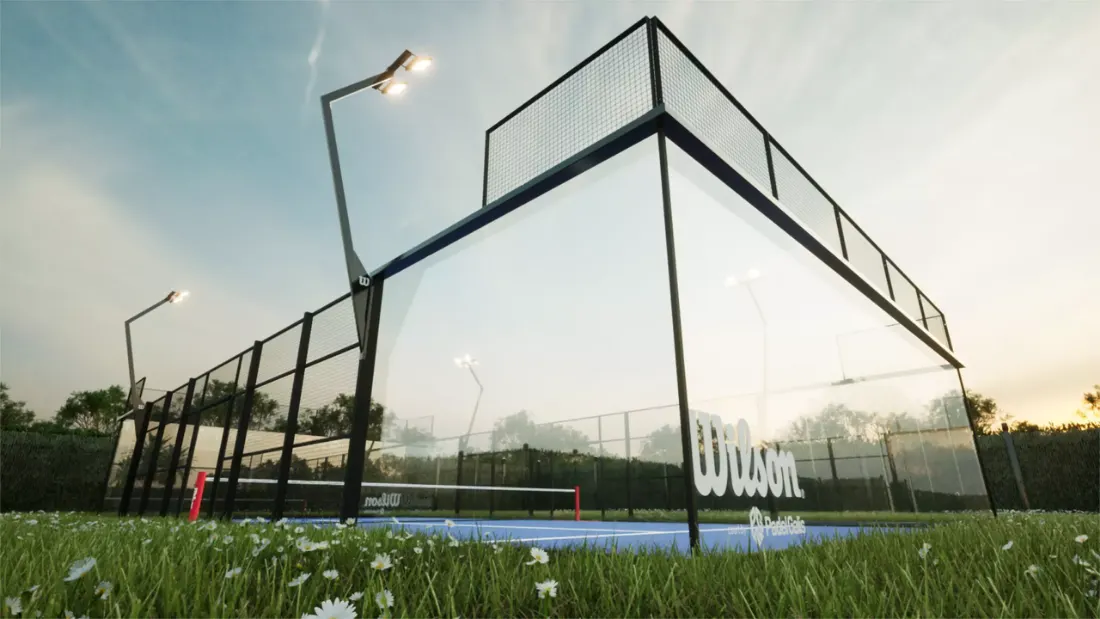
Padel courts are enclosed and smaller than tennis courts, making the game faster and more dynamic. Here's how they compare:
- Tennis court: 78 feet long x 36 feet wide
- Padel court: 66 feet long x 33 feet wide
- Enclosure: Padel courts are surrounded by walls/glass, while tennis courts are open
- Net height: Padel nets are slightly lower than tennis nets
The main differences between padel and tennis courts are the walls and the smaller playing area, which change the game's strategy and style.
Padel Court Specifications
Court Structure:
- Length: 20 meters (66 feet)
- Width: 10 meters (33 feet)
- Walls: 3-4 meters high glass panels
- Net height: 88 cm (34.6 inches) at center
- Surface: Usually artificial grass or synthetic materials
Unique Features:
- Enclosed playing area with walls
- Ball can bounce off walls and remain in play
- Smaller court creates faster-paced games
- Requires different strategic approach
Court Surface Types
Hard Courts
- Material: Asphalt or concrete with acrylic coating
- Characteristics: Consistent bounce, medium speed
- Maintenance: Regular resurfacing required
- Popular for: Professional tournaments, year-round play
Clay Courts
- Material: Crushed brick, shale, or stone
- Characteristics: Slower surface, higher bounce
- Maintenance: Daily watering and rolling
- Popular for: European tournaments, slower play style
Grass Courts
- Material: Natural grass
- Characteristics: Fast surface, low bounce
- Maintenance: Intensive care required
- Popular for: Traditional tournaments, fast play style
Synthetic Courts
- Material: Artificial grass or rubber-based surfaces
- Characteristics: Consistent play, weather resistant
- Maintenance: Minimal upkeep required
- Popular for: Indoor facilities, all-weather play
Planning and Construction Considerations
Site Preparation
Foundation Requirements:
- Proper drainage system essential
- Level surface with minimal slope (1% maximum)
- Adequate sub-base preparation
- Consideration for local soil conditions
Access and Safety:
- Clear access paths for players and equipment
- Adequate lighting for evening play
- Safety barriers and fencing
- Emergency access routes
Cost Considerations
Construction Costs (Approximate):
- Outdoor hard court: $50,000-$100,000
- Indoor facility: $200,000-$500,000+
- Clay court: $30,000-$60,000
- Grass court: $20,000-$40,000
Ongoing Maintenance:
- Regular resurfacing every 5-10 years
- Net replacement every 2-3 years
- Lighting maintenance and upgrades
- Seasonal maintenance for outdoor courts
International Standards and Regulations
ITF (International Tennis Federation) Standards
The ITF maintains strict standards for court dimensions and specifications:
- Court dimensions: Must meet exact measurements
- Net specifications: Height and tension requirements
- Surface characteristics: Bounce and speed standards
- Lighting requirements: Minimum lux levels for competition
National Variations
While international standards are consistent, some countries may have additional requirements:
- Safety regulations: Local building codes
- Environmental considerations: Sustainability requirements
- Accessibility standards: ADA compliance in the US
- Zoning requirements: Local planning regulations
Maintenance and Upkeep
Regular Maintenance Tasks
Daily:
- Court sweeping and cleaning
- Net tension checking
- Line inspection and repair
- Debris removal
Weekly:
- Surface inspection for cracks or damage
- Net height verification
- Lighting system checks
- Fence and barrier inspection
Monthly:
- Comprehensive surface assessment
- Equipment inventory and replacement
- Drainage system inspection
- Safety equipment verification
Seasonal Considerations
Spring:
- Post-winter damage assessment
- Surface repair and resurfacing
- Equipment replacement and upgrades
- Facility preparation for peak season
Summer:
- Increased maintenance frequency
- Heat-related surface care
- Water management for clay courts
- Peak usage management
Fall:
- Preparation for winter conditions
- Equipment storage and protection
- Surface protection measures
- Facility winterization
Winter:
- Indoor facility optimization
- Equipment maintenance and repair
- Planning for next season
- Facility improvements and upgrades
Conclusion
Understanding tennis court dimensions is essential for players, facility managers, and anyone involved in tennis court construction or maintenance. Whether you're planning to build new courts, convert existing facilities, or simply want to understand the sport better, having accurate measurements ensures proper setup and fair play.
The key takeaways are:
- Standard dimensions are consistent worldwide for fair competition
- Indoor facilities require additional space considerations
- Court conversions (tennis to pickleball/padel) can maximize facility usage
- Proper maintenance ensures longevity and safety
- International standards provide consistency across all levels of play
Are you thinking about building padel courts or your own club? Make sure you get familiar with the courts' dimensions! Whether it's for singles, doubles, casual games, or pro matches, having the right measurements keeps everything set up right. Indoors or outdoors, sticking to the right dimensions makes the game more fun and fair for everyone.
Remember that proper court dimensions are just the beginning - surface quality, lighting, safety features, and ongoing maintenance all contribute to creating an excellent tennis facility that serves players of all levels for years to come.
Transform Your Club with PLAI
PLAI is the all-in-one platform that helps tennis clubs optimize their facilities, enhance member experience, and grow sustainably. From intelligent court scheduling and member management to automated payments and comprehensive analytics, PLAI gives you the tools to create exceptional experiences that keep players engaged and coming back.